Christianity. Was it forced on the African Diaspora? During my college years, I struggled to cope with the idea that Christianity was forced onto enslaved Africans as a way to keep them docile.
In many history books, this seems to be the case—it’s what they teach in the schools, it’s what most Black students grow up believing. As a young Black woman, I have to accept my history: it is tragic, but it is true that my ancestors perished during the Transatlantic Slave Trade.
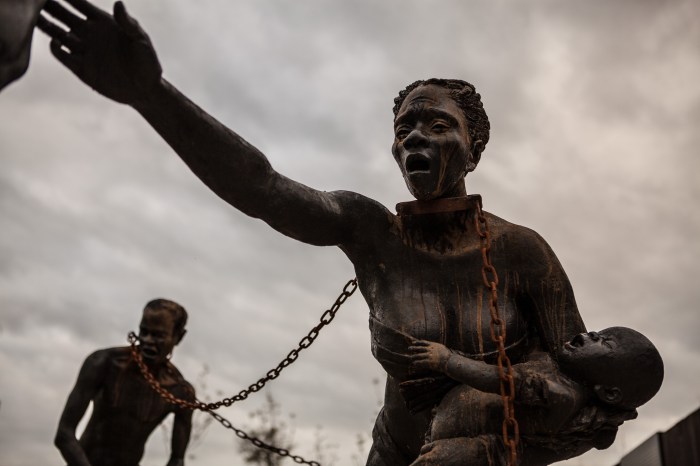
Those who survived were auctioned off, later dying at the hands of plantation owners or revolts that rose and spread throughout the islands. Some of these revolts eventually led to their freedom, but before that, the suffering they endured was severe.
I write this because I want us to know the truth. Each Black person in the Americas and Caribbean region must come face to face with the fact that our ancestors were brought here, tormented, and later, taught a religion, which most of us still hold to.
But … this religion? Is it the religion of the colonizers, or was there something else about it that our ancestors clung to?
Bought, stolen, kidnapped—how they arrived here doesn’t matter any more than what took place once they got to this side of the world. They had their own spiritual beliefs, yes, but was Christianity known to them?
Understanding Our Dark History
White plantation owners needed a way to justify the mass transport of Africans to the Americas and the Caribbean. They needed to convince those who lived in the middle and upper class Europe that their brutal use of Africans in chattel slavery was, in fact, ethical. Bringing Africans to the Americas wasn’t purely about racial discrimination.
In fact, Africans were well-integrated into European culture. Europe traded with Africa and considered them as people, developing friendships, alliances, and policies that benefited both continents. What changed?
Prior to the Transatlantic slave trade, the Arabs had already invested in using the Africans as slaves, primarily citing Islam as their reason for doing so. Most Arabs refused to engage in trade with Africa if the leaders didn’t convert to Islam, and those who refused were subjected to brutal slavery, as was allowed due to Islam’s belief that unbelievers weren’t entitled to the same humane rights as Muslims.
Now, this isn’t taught in your history books, primarily because this form of slavery didn’t take place in the Americas. However, it’s evident by the number of Muslims populating the Gold Coast regions of Africa.
How Christianity Came to the Enslaved
The head churches in Europe, primarily the Catholic church, saw slavery as a necessary evil in order to sustain the European economy, so they allowed it. However, the churches taught the importance of spreading salvation to all and that even the enslaved were brothers and sisters to the masters in Christ.
This, for obvious reasons, upset the plantation owners, who didn’t enjoy the fact that the enslaved had the same right to the Throne as they did. Most plantation owners paid churches, politicians, and scientists to fund the idea that enslaved Africans were ‘not truly human’, were punished by God as descendants of Ham, or that they were ‘cursed’.
The Bible that they gave their slaves was heavily edited, and the text about freedom in Christ, the Exodus, and other areas that suggested that both the master and the enslaved were equal in Christ was removed.
The thing is that most of us learned that the Africans were converted to Christianity to keep them docile, but this isn’t true. The Africans were converted because the churches in Europe pressured the plantation owners to ensure conversion.
What truly happened was that the Bible was edited and slaves were prevented from learning to read and write so that they wouldn’t be able to access the wealth of information and truth about Christianity. Preachers (in favor of slavery) preached a pseudo-message of submission to the slaves, leaving out the message of freedom that the Bible truly taught.
Some planters taught that African heathenism and their spirituality were grounds for capturing and enslaving them.
How Christianity Ended Slavery
Most Europeans weren’t aware of the true horror taking place in the Americas. Africans living in Europe weren’t classed as heathens. However, this myth spread across the Americas purely to justify the need for slaves.
Churches that were against slavery and the slave trade began to thrive, with most preaching that Christianity was anti-slavery. These Christians became missionaries, and as a form of protest, they went to the Americas and taught the Africans to read and write. They distributed unedited versions of the Bible and encouraged the Africans (through the use of Scripture) to fight for their freedom.
Through this, the Africans found true revival, realizing that God is a God of freedom. Through Scripture, they were empowered to fight back rather than remain docile.
They sang and wrote Spirituals such as ‘Nobody Knows the Trouble I’ve Seen’, which speaks of the hardships many of the slaves bore on the plantation. ‘Wade in the Water’ is another Spiritual that was sung, based on the Israelites’ Exodus from Egypt.
These songs also contained hidden messages to fugitive slaves, helping them to avoid recapture. These songs were inspired by their music, culture, and spirituality. These lyrics helped to form their rebellion.
The most successful of these revolts and rebellions is the Haitian Revolution, the first country to abolish slavery through a rebellion. Toussaint Louverture led this rebellion. He was well-educated, born a slave, but inspired by his faith in God to lead a movement that would bring freedom to his people.
Freedom, in his eyes, was every man’s God-given right.
Samuel Sharpe was an enslaved Jamaican and a Baptist deacon who led the rebellion called the Baptist War (Christmas Rebellion). During this time, many missionaries and abolitionists had learned of a bill that was to abolish slavery. Several churches organized protests and strikes, and Sharpe’s church was one of them.
The Church’s Role in the Slave Trade
The Christian faith has had its history of terrible things done under God’s name, and unfortunately, slavery was one of these things.
It is true that the planters used the Bible to justify their actions; there is no denying that. However, now we can access the truth. Christianity was the key to freedom.
My ancestors were the ones who used this very religion to liberate the African slaves, by finding their identity in it. Even so, they regained and reconnected with a form of worship that was authentic and uniquely theirs, rooted in West African culture, and brought it to a society that sought to destroy it.
Many religious scriptures and holy books have been interpreted, reinterpreted, and even misinterpreted to fit a bias or personal agenda. However, what matters now is our willingness to learn our history and do better as a community guided by love.
God created us in His image, but with that, He gave us free will. We all have a right to freedom: freedom to live, to learn, to believe.
Freedom is what my ancestors fought for. Freedom is what should be encouraged. Freedom is what should be celebrated.


Strengthen your faith and grow with God. Get new bible-study content delivered right to your inbox.