Many of us have an understanding of how terrible the physical and mental pain of the cross was.
Even though we don’t fully comprehend it in its entirety, we do acknowledge that the crucifixion was the worst kind of death—and a humiliating one at that.
Yet, something about it still doesn’t really sit well with me—not the crucifixion, I mean. But rather, the way its all laid out.
The Unaligned Will
You see, we’re used to saying things like God sent His Son to die for us, and thus the separation of God and Christ becomes eminent in the way we speak. As one pastor puts it (and I’ll share his sermon in the next post), the oneness of the Trinity was threatened for our salvation.
For the first time, Yeshua’s will and the Father’s will was not aligned. Yeshua prayed that night, ‘if it is possible, let this cup pass from me’, and in the same breath He said, ‘yet it is not my will, but your will.”
When Yeshua taught His disciples to pray, He said, ‘Your will be done on earth as it is in heaven.” The Godhead had already established this death before the foundation of the world. And Christ, being the eternal Word, had been the one to prophesy His death and resurrection. In fact, we see that He prophesies this in the Old Testament (Isaiah) and the New Testament when He speaks with Peter about His upcoming death.
Yet, a lot of the teachings we receive in some way undermines how much of a sacrifice Christ made—for us. The thing about it, is that while Christ was praying in the garden He prays the same thing three times.
As insignificant as this seems, Yeshua asked the Father not once, not twice, but three times if the cup of death can pass from Him. We as Christians follow this sentiment up with ‘not my will but your will’, but the seemingly insignificant detail was that Christ did not want to die. He would’ve much preferred if the Father had a change of heart—and changed the scope of His set Word.
The Bible says that God’s word cannot return to Him void. Isaiah records God speaking:
So shall My word be that goes forth from My mouth;
It shall not return to Me void,
But it shall accomplish what I please,
And it shall prosper in the thing for which I sent it.Isaiah 55:10
And we ought to recall that Christ is the Word of God. So, thousands of years prior to this moment in the garden, God had already set in place the motion of His word. The same Isaiah records this:
Who has believed our report?
And to whom has the arm of the Lord been revealed?
For He shall grow up before Him as a tender plant,
And as a root out of dry ground.
He has no form or comeliness;
And when we see Him,
There is no beauty that we should desire Him.
He is despised and rejected by men,
A Man of sorrows and acquainted with grief.
And we hid, as it were, our faces from Him;
He was despised, and we did not esteem Him.Surely He has borne our griefs
And carried our sorrows;
Yet we esteemed Him stricken,
Smitten by God, and afflicted.
But He was wounded for our transgressions,
He was bruised for our iniquities;
The chastisement for our peace was upon Him,
And by His stripes we are healed.
All we like sheep have gone astray;
We have turned, every one, to his own way;
And the Lord has laid on Him the iniquity of us all.He was oppressed and He was afflicted,
Yet He opened not His mouth;
He was led as a lamb to the slaughter,
And as a sheep before its shearers is silent,
So He opened not His mouth.
He was taken from [o]prison and from judgment,
And who will declare His generation?
For He was cut off from the land of the living;
For the transgressions of My people He was stricken.
And they made His grave with the wicked—
But with the rich at His death,
Because He had done no violence,
Nor was any deceit in His mouth.Yet it pleased the Lord to bruise Him;
He has put Him to grief.
When You make His soul an offering for sin,
He shall see His seed, He shall prolong His days,
And the pleasure of the Lord shall prosper in His hand.
He shall see the labor of His soul, and be satisfied.
By His knowledge My righteous Servant shall justify many,
For He shall bear their iniquities.
Therefore I will divide Him a portion with the great,
And He shall divide the spoil with the strong,
Because He poured out His soul unto death,
And He was numbered with the transgressors,
And He bore the sin of many,
And made intercession for the transgressors.Isaiah 53
Yet, in all that is said, something still feels amiss.
What He Feared
The Gospel of John records Christ’s prayer in the Garden. His opening lines were:
“Father, the hour has come. Glorify your Son, that your Son may glorify you. 2For you granted him authority over all people that he might give eternal life to all those you have given him. 3Now this is eternal life: that they know you, the only true God, and Jesus Christ, whom you have sent. 4I have brought you glory on earth by finishing the work you gave me to do. 5And now, Father, glorify me in your presence with the glory I had with you before the world began.”
John 17:1-4
So, what feels amiss? What are we not quite comprehending?
There are two passages of Scripture that points to not just Christ’s oneness with the Father, but sharing in the same glory as the Father before time. Though we know that Christ is God (a part of the eternal Godhead), the second person in the Trinity, it is often during the stages of death that we seemingly separate Christ and God.

Yet, what we fail to comprehend is that for the first time, Christ experienced something that He would have never experienced if He hadn’t become human. He experienced sorrow, distress, anxiety. Anguish.
These emotions, as lightly as we take them, is something that God would never need to experience—because He is God. He is the author and finisher of our faith. Hebrews urges us to lay aside the sin that easily ensnares us and run with endurance the way Christ endured the cross.
Therefore we also, since we are surrounded by so great a cloud of witnesses, let us lay aside every weight, and the sin which so easily ensnares us, and let us run with endurance the race that is set before us, 2looking unto Jesus, the author and finisher of our faith, who for the joy that was set before Him endured the cross, despising the shame, and has sat down at the right hand of the throne of God.
Hebrews 12:2-3
Luke 22:44 records Christ suffering extreme agony to the point where His sweat was like blood falling to the ground.
This rare medical condition, once thought impossible, now has a diagnosis in various modern medical records as hematohidrosis, a rare condition in which one bleeds from intact skin. The bleeding is due to the rupture of the very small blood vessels of the skin and is attributed to fear and extreme emotional and mental stress.
WebMD says that this phenomenon is so rare that only a few cases have ever been recorded in the 20th century. Doctors don’t know what causes this, but says that this condition can be activated by the body’s ‘flight or fight response’. In other words, extreme fear.
Most of us would never experience such emotional distress that we sweat blood, yet Christ suffered this because of what He was about to go through. As human, fear became the driving instinct of wanting the cup to ‘pass by’. The Bible says a few things about fear.
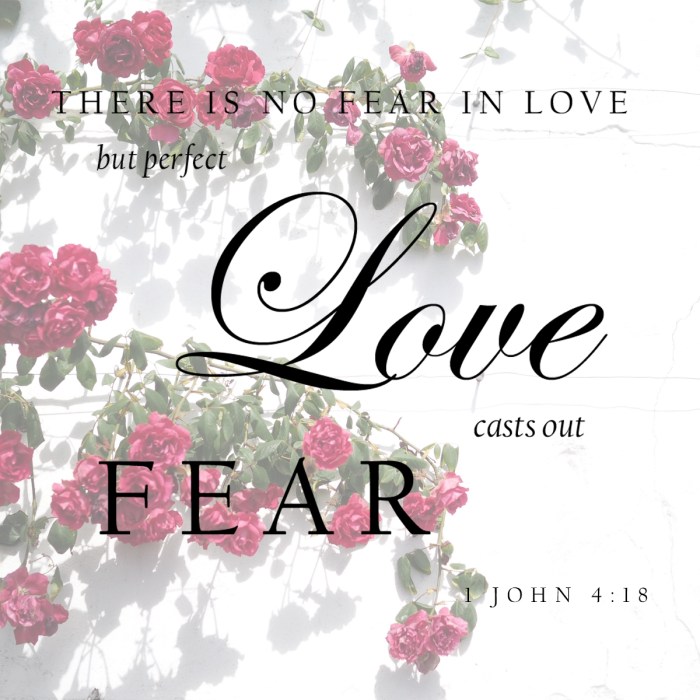
A – There is no fear in love. Perfect love casts out all fear (1 John 4:18)
B – God didn’t give us a spirit of fear, but of power, love, and a sound mind (2 Timothy 1:7)
C – We should fear no evil for God will be with us, even if we walk through the valley of the shadow of death (Psalms 23: 4)
D – We ought to humble ourselves before God and cast our anxieties on Him (1 Peter 5:6-8)
E – Not to be anxious about anything, but with prayer and petition, make our requests known to God and the peace of God that passes all understanding will guard our hearts and minds (Philippians 4:6-7)
F – God brings consolation and joy to those who have anxiety (Psalms 94:19)
G – The Lord will be with us where ever we go (Joshua 1:9)
H – Nothing can separate us from God’s love: not our fears nor our worries (Romans 8:38-39)
And the list can go on. Yet … there was a point in Christ’s life when He was overwhelmed with anxiety and sorrow, even to the point of death.
He pleaded with God and tried to renegotiate the atonement for our sins—and one could say, the cup might’ve passed. Because the very thing that we miss out on—the thing that perhaps define God’s love for us more than the pain and the sacrifice was that God Himself contemplated backing out of His own deal.
He contemplated breaking His own word, going back on His own prophesy, deciding that our salvation might not be worth it … and for once, I wonder, what would happen if He had actually decided not to go through with it?
During the days of Jesus’ life on earth, he offered up prayers and petitions with fervent cries and tears to the one who could save him from death, and he was heard because of his reverent submission. 8Son though he was, he learned obedience from what he suffered 9and, once made perfect, he became the source of eternal salvation for all who obey him 10and was designated by God to be high priest in the order of Melchizedek.
Hebrews 5:7-10
You see, in the beginning of Christ’s ministry, He faced temptation from the devil who quoted to Him Psalms 91. And easily, it could be said that Christ, as God, could have commanded a host of angels to take Him out from what He was about to face.
He could’ve unleashed His wrath on us instead of bearing the wrath on Himself. He could have—for a split moment in history—wiped this earth clean … and save Himself instead.
And He, as God, wouldn’t be in the wrong. After all, it is us who deserved the punishment, not Him. His fear and agony were that He had to bear a punishment He didn’t deserve so that we could be saved. And while we don’t often contemplate the what-ifs, the truth is it could’ve happened.
The Son is the image of the invisible God, the firstborn over all creation. 16For in him all things were created: things in heaven and on earth, visible and invisible, whether thrones or powers or rulers or authorities; all things have been created through him and for him. 17He is before all things, and in him all things hold together. 18And he is the head of the body, the church; he is the beginning and the firstborn from among the dead, so that in everything he might have the supremacy. 19For God was pleased to have all his fullness dwell in him, 20and through him to reconcile to himself all things, whether things on earth or things in heaven, by making peace through his blood, shed on the cross.
21Once you were alienated from God and were enemies in your minds because of your evil behavior. 22But now he has reconciled you by Christ’s physical body through death to present you holy in his sight, without blemish and free from accusation— 23if you continue in your faith, established and firm, and do not move from the hope held out in the gospel. This is the gospel that you heard and that has been proclaimed to every creature under heaven, and of which I, Paul, have become a servant.
Colossians 1:15-23
What He Sacrificed
Christ left His Throne that was well-established from before time began, taking on human-form, becoming lower than the angels—lower than some humans even—bearing temptation and mockery by Satan, endured the hardships that humans had to face.

He performed miracles, and spoke with authority, led his disciples, and taught the message of the Kingdom. He preached to the people that they ought to put their trust in God, setting their minds on things above.
In your relationships with one another, have the same mindset as Christ Jesus:
Who, being in very nature God,
did not consider equality with God something to be used to his own advantage;
7rather, he made himself nothing
by taking the very nature of a servant,
being made in human likeness.
8And being found in appearance as a man,
He humbled himself
by becoming obedient to death—
even death on a cross!9Therefore God exalted him to the highest place
and gave him the name that is above every name,
10that at the name of Jesus every knee should bow,
in heaven and on earth and under the earth,
11and every tongue acknowledge that Jesus Christ is Lord,
to the glory of God the Father.Philippians 2:5-11
He presented Himself as the only way to the Father, and told those that if they believed in Him, they would be guaranteed an eternal life with Him. And all those promises would’ve been broken if He decided to—well, let the cup pass.
He left His authority with the Father, and His submission to the Father’s will was for us. We already know how terrifying it is to leave the comforts of our home to embark in new territory, to gain new experiences in a different country. We dread death, even as humans, and yet, we’ve been so climatized to death, that even though it is one of our greatest fears, it has become a fear that we, over time, learn to accept.
Yet, God, who is immortal, who is all-powerful, and all-knowing, left His Throne to reside among humanity, experiencing what we experienced—and ultimately, facing the experience of death, so that, the promise that He assured us can be fulfilled. So that we, as humans, take part in oneness with God.
The Son is the radiance of God’s glory and the exact representation of his being, sustaining all things by his powerful word. After he had provided purification for sins, he sat down at the right hand of the Majesty in heaven.
Hebrews 1:3
In the Gospel of John (chapter 15), there is a poetic comfort of Christ’s words to His disciples as He got closer to His death. Christ describes Himself as the true vine, urging His disciples to abide in Him as He abides in them. He speaks about the love between Himself and the Father, and passes that same love to His disciples. And thus, true reconciliation is seen here.
There is no greater love than someone to lay down his life for his friends. He no longer calls us servants, but friends for all that He has seen and heard from the Father, He makes known to us. We didn’t choose Him, but rather, He appointed us so that we can go out and bear fruit.
“This is my commandment, that you love one another as I have loved you. 13Greater love has no one than this, that someone lay down his life for his friends. 14You are my friends if you do what I command you. 15No longer do I call you servants, for the servant does not know what his master is doing; but I have called you friends, for all that I have heard from my Father I have made known to you. 16You did not choose me, but I chose you and appointed you that you should go and bear fruit and that your fruit should abide, so that whatever you ask the Father in my name, he may give it to you.”
John 15:12-16
Who He Loved
God chose us before the world was even created, to be adopted into His sonship, and to ensure this, He set aside His own glory, His own will, His own authority—His own life, to ensure that in this age and the age to come, he can call us friends.
And when we return this love, we show it by completely trusting in Him—His love language is that of true surrender and obedience. And the most frightening and heart-rendering part about this is that He didn’t have to do it. He didn’t have to suffer.
Yet, He humbled Himself, not because of what He would have after His submission, but because of what we would receive—an eternal friendship that can never be broken. For the future glory that is to come where there is no death or corruption. As Paul asks, what will separate us from the love of Christ?
Shall tribulation, or distress, or persecution, or famine, or nakedness, or danger, or sword?
He endured all that because of His love for us.
For I am sure that neither death nor life, nor angels nor rulers, nor things present nor things to come, nor powers, nor height nor depth, nor anything else in all creation, will be able to separate us from the love of God in Christ Jesus our Lord.
Next Post…
I watched an interesting video on my YouTube highlighting the horrors of the crucifixion. This YouTube is of interest to me because it connected several key emotions that sometimes go ‘missing’ whenever we hear of the crucifixion story, as well as clear up a few misconceptions when it comes to the crucifixion.
Some years ago, God revealed how horrible the crucifixion was even before me researching it. He mostly highlighted the terrible way those crucified had to breathe—something that had been unknown to me until God revealed it. Prior to this revelation, I didn’t know or understand how terrible such a punishment was.
When God revealed this to me, I was mortified—and it actually strengthened my relationship with God. I was more cautious of what I did, because I realized, at that time, that what happened to Christ, was supposed to happen to me.
I’m not well-equipped to write about something as horrifying as that, so I decided that for my next post, I can share the video. I hope that with this video, it will inspire you to do some research into it as well, and I hope that it changes your perspective on what Christ had to endure and deepens your relationship and love for God as it did with me.
Can’t get enough of The Ravyn? Subscribe to my blog below:
 The RAVYN Blog