The Black community contributed in many ways to the fashion scene. Western African culture has especially shaped modern fashion.
Various fabrics from Africa have become popular among the Black community, and European designers have drawn inspiration from the intricate weaving and patterns of African textiles.
Seven textiles have shaped Global Africa in a way that is still seen in both classical and contemporary fashion:
- Mbuti
- Kuba
- Kente
- Adire
- Asoke
- Ankara
- Baoulé
From geometric patterns to dyeing techniques and detailed weaving, see where these fabrics originate and how they shaped the global fashion scene.
Mbuti
The beautifully intricate weaving of Mbuti Barkcloth holds significant meaning for the Mbuti people of the Congo region of Africa.
The Mbuti people are primarily hunter-gatherers, found in the Congo forests. They’re known for their short stature, and their textiles are known for intricate linework, patterns, and weaving styles.

Kuba Cloth
Made from the raffia plant, Kuba cloth is found in the Democratic Republic of the Congo. It’s woven by men on an inclined loom, then embroidered using a specific technique, which produces a velvet-like texture on the surface.
The women are responsible for this detailed embroidery, known for its clean-cut geometric shape that merges with other patterns throughout the textile.

Kente
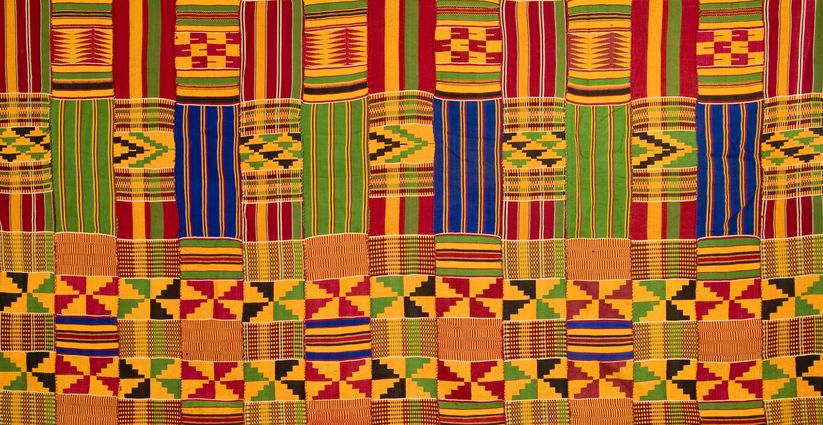
The Akan people are a well-known ethnic group found in present-day Ghana, known for their iconic Kente cloth. This cloth became popular within the African Diaspora and is usually used during graduation ceremonies. However, the cloth itself is typically reserved for Akan royalty, and it’s generally woven by men in strips.
Each strip is perfectly aligned to create a pattern, then stitched together to form a large textile. Kente fabric is a jacquard weave, and the most expensive of the cloth is made of silk. Each Kente cloth is named, as it is believed that naming the fabric gives it spiritual power.
Adire
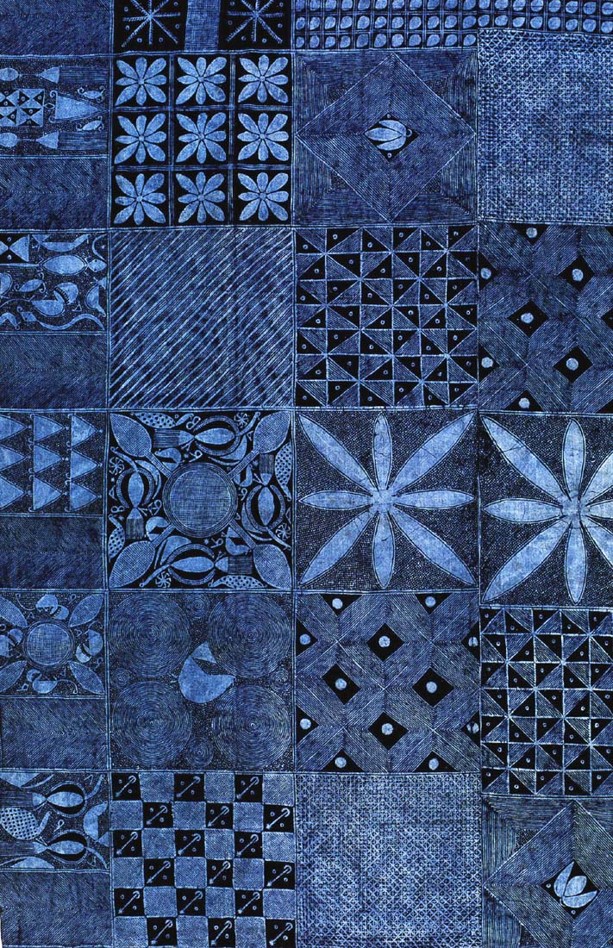
Adire cloth is a Nigerian textile often worn by Yoruba women. Adire means ‘tie and dye’ and is made using the resist-dye technique and indigo.
Intricate patterns are painted onto the fabric using a special type of paste. The fabric is then dyed in indigo, and after drying, the paste is washed off, leaving intricate white and light-blue patterns in the indigo.
The process of making Adire fabric involves weaving strips and piecing them together to form a larger piece, which is then wrapped around the body. Today, Adire cloth is a popular choice among many Nigerian women.
Asoke
The Asoke fabric is a very prestigious cloth, found among the Yoruba group. Asoke means ‘top cloth’, and is worn as a full garment, usually reserved for weddings, funerals, or other important ceremonies.
However, pieces of Asoke can be seen in daily wear. Asoke is made of a rare silk and cotton blend and is embroidered. A long strip of fabric is woven, and then cut and pieced together to form a full textile.
Men traditionally wear the Asoke as an agbada over a dashiki, and women wear it in the form of a gele, buba (blouse), and iro (sarong skirts).

Ankara
Probably the most recognizable fabric from West Africa, Ankara didn’t actually originate from Africa.
It was originally made by the Dutch for the Indonesian market, but it didn’t sell well there, so they began selling it in West Africa. It is formerly known as Dutch wax print, but over time, the fabric has become almost synonymous with West African fashion and is now known as Ankara.

Baoulé
The Baoulé textile is an Ikat-dyed indigo fabric made by the Baule peoples of the Ivory Coast. It’s often woven in long strips, and then sewn together to make a complete textile, often worn as a wrap skirt (by the women) or draped over the shoulder by men.


Can’t get enough of The Ravyn? Subscribe to my blog below:



 The RAVYN Blog